 LEWOS BIOTECHNOLOGYNEUROSCIENCE · PRECLINICAL CROExplore · Discover · Advance
ASD · Autism spectrum disorder
Autism spectrum disorder
ASD combines social-communication deficits, repetitive behavior and learning or memory changes. Synaptic and epigenetic mechanisms require complementary model backgrounds.
Shank3-KO models synaptic dysfunction and social behavior. MECP2-TG covers an epigenetic disease mechanism. Social and repetitive phenotypes can be compared across developmental windows.
ASD studies can quantify social preference, social novelty and 12 classes of spontaneous behavior across ages and sexes.
- 3ASD models
- 12Fine-behavior domains
- ♀ & ♂Sex-specific validation
- 2Mechanism pathways
Model strategy
Social preference, social novelty and repetitive behavior.
Match the model and study conditions to candidate mechanism, intervention stage and target tissue.
Shank3-KO
Social deficit and synaptic function
MECP2-TG
MECP2 overexpression phenotype
Fmr1 mutant
Fragile-X research direction
Evaluation endpoints
- 01Three-chamber social and social novelty
- 02Repetitive and fine-motor behavior
- 03Novel-object recognition and cognitive flexibility
- 04Sex differences with molecular and tissue validation
Representative data
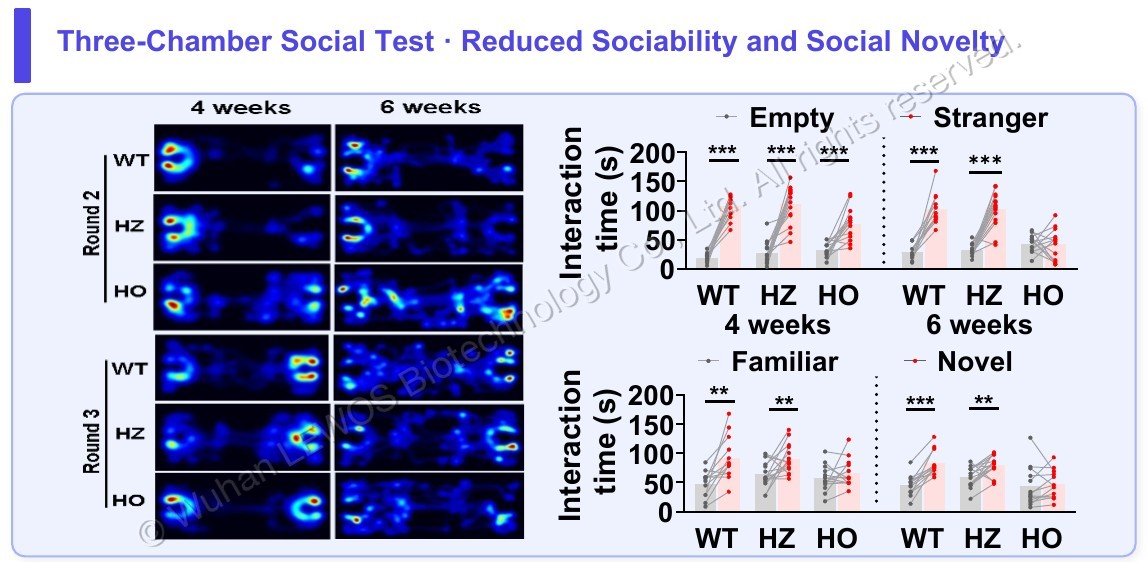
Three-chamber social test · Sociability index & social novelty index deficits
Three-chamber social test in Shank3-KO mice: heat maps of social exploration trajectories for the WT, HZ and HO groups at 4 and 6 weeks of age in Round 2 and Round 3, plus statistics of interaction time (Interaction time, s) under the Empty/Stranger and Familiar/Novel conditions, reflecting deficits in the sociability index and social novelty index.
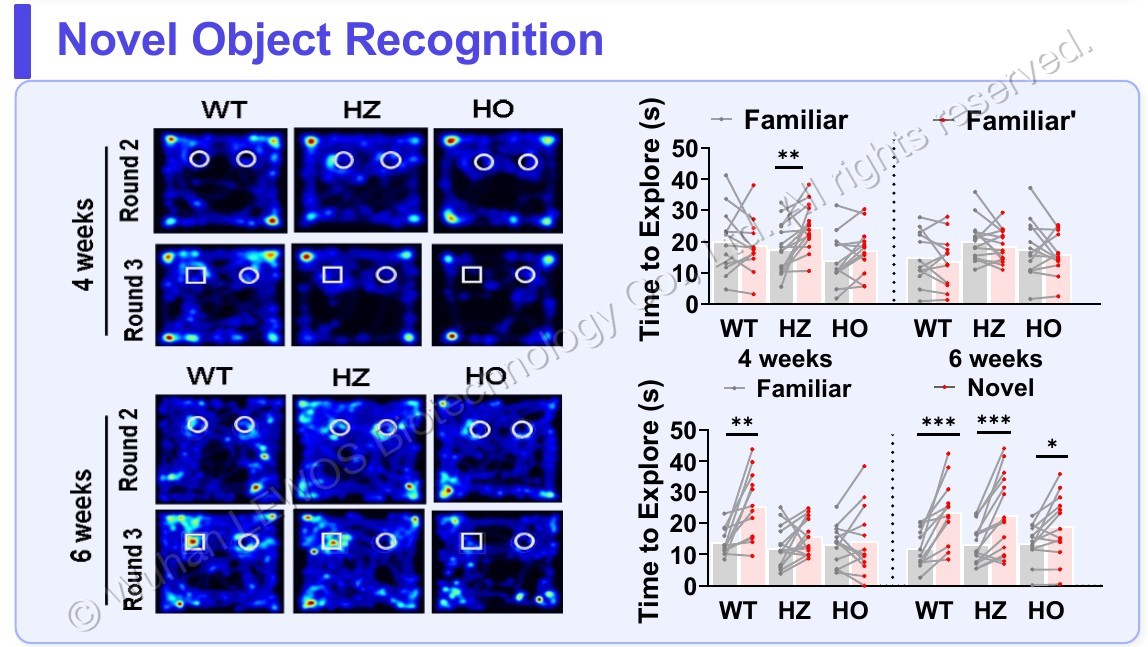
Novel object recognition · Cognitive flexibility deficits
Novel object recognition test in Shank3-KO mice: heat maps of exploration trajectories for the WT, HZ and HO groups at 4 and 6 weeks of age in Round 2 and Round 3, and exploration time (Time to Explore, s) under the Familiar/Familiar' and Familiar/Novel conditions, reflecting cognitive flexibility deficits.
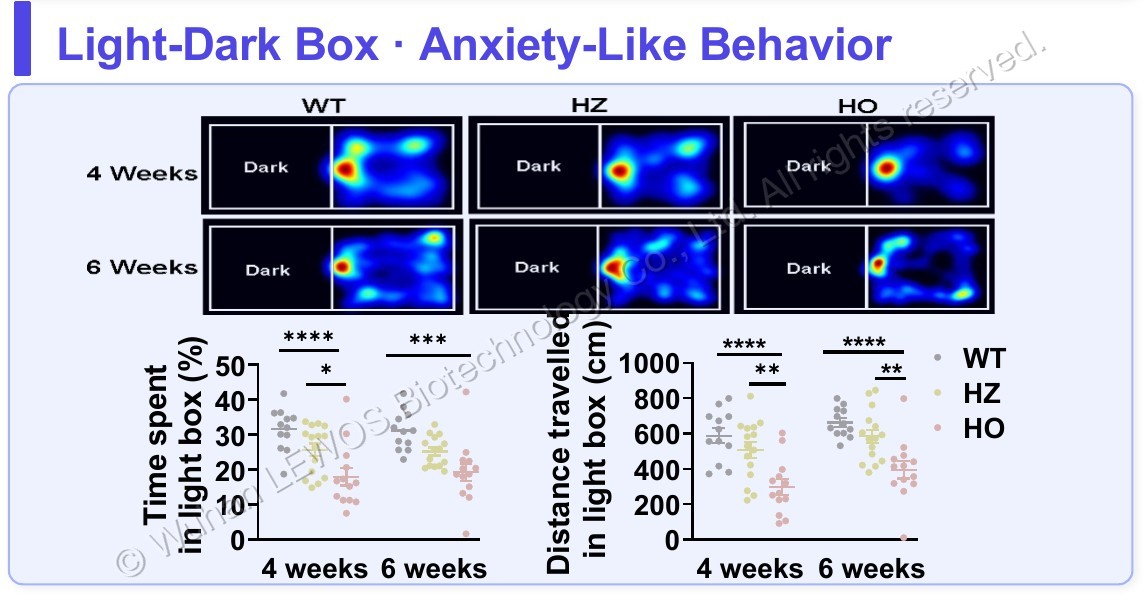
Light-dark box test · Anxiety-like behavioral phenotype
Light-dark box test in Shank3-KO mice: activity heat maps of the light and dark compartments for the WT, HZ and HO groups at 4 and 6 weeks of age, plus statistics of the percentage of time spent in the light compartment and the distance travelled within the light compartment (cm), reflecting an anxiety-like behavioral phenotype.
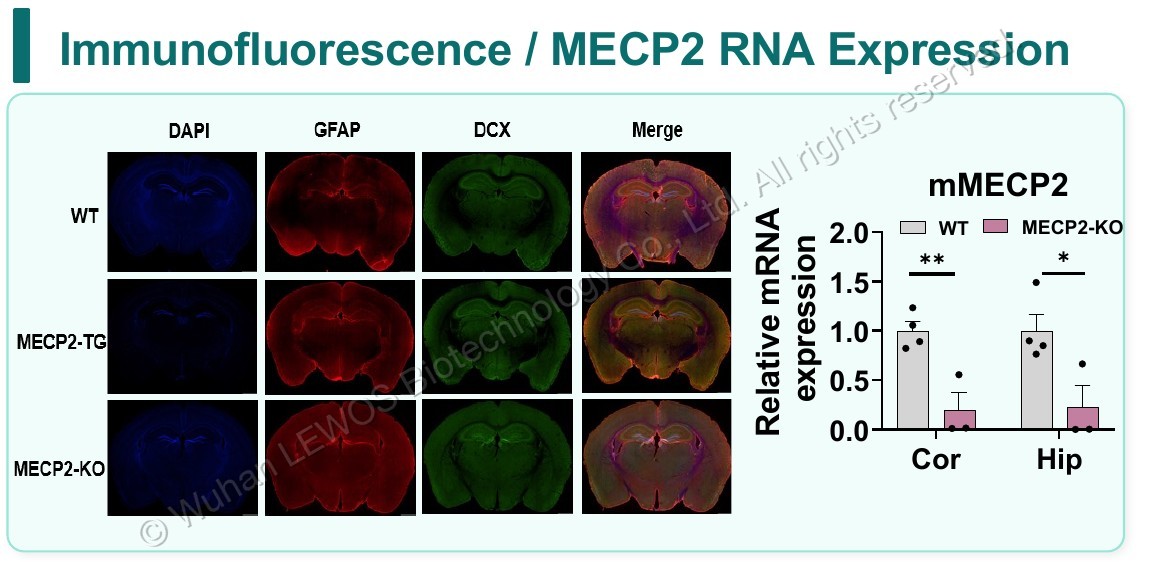
Immunofluorescence / MECP2 RNA expression level
Immunofluorescence staining of brain tissue from MECP2-TG and MECP2-KO mice (DAPI, GFAP, DCX, Merge, with a WT control), and bar graphs of relative mMECP2 mRNA expression in the cortex (Cor) and hippocampus (Hip).
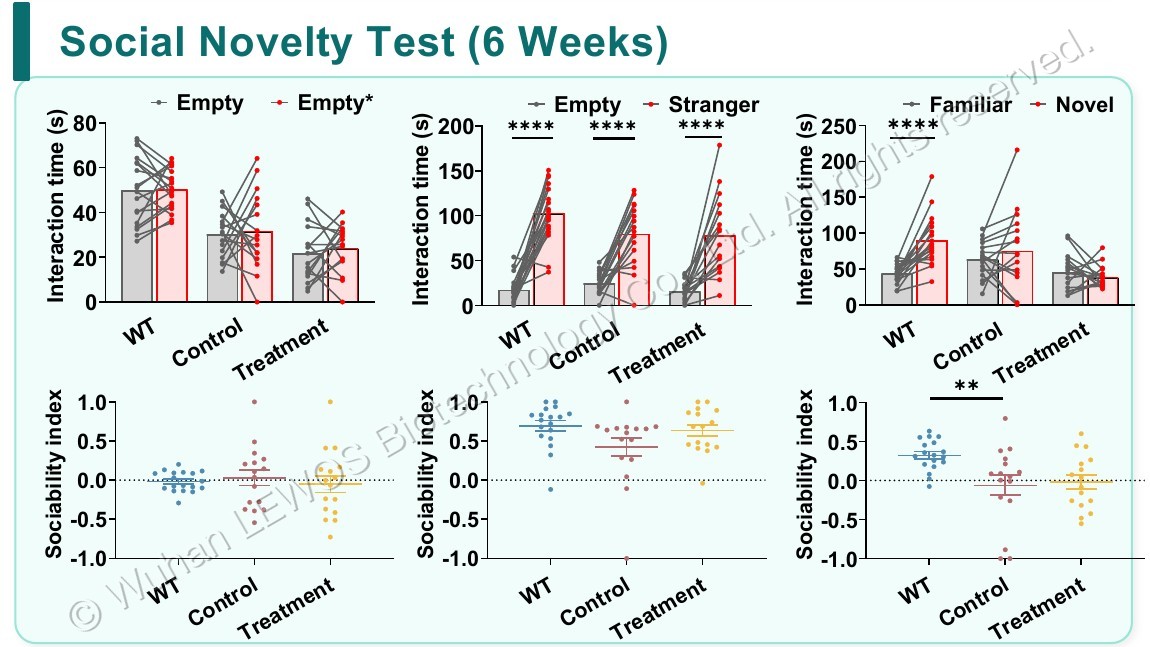
Three-chamber social · Social novelty index deficits (6 weeks of age)
Three-chamber social test in MECP2-TG mice at 6 weeks of age: statistics of interaction time and sociability index (Sociability index) for the WT, Control and Treatment groups under the Empty/Empty', Empty/Stranger and Familiar/Novel conditions.
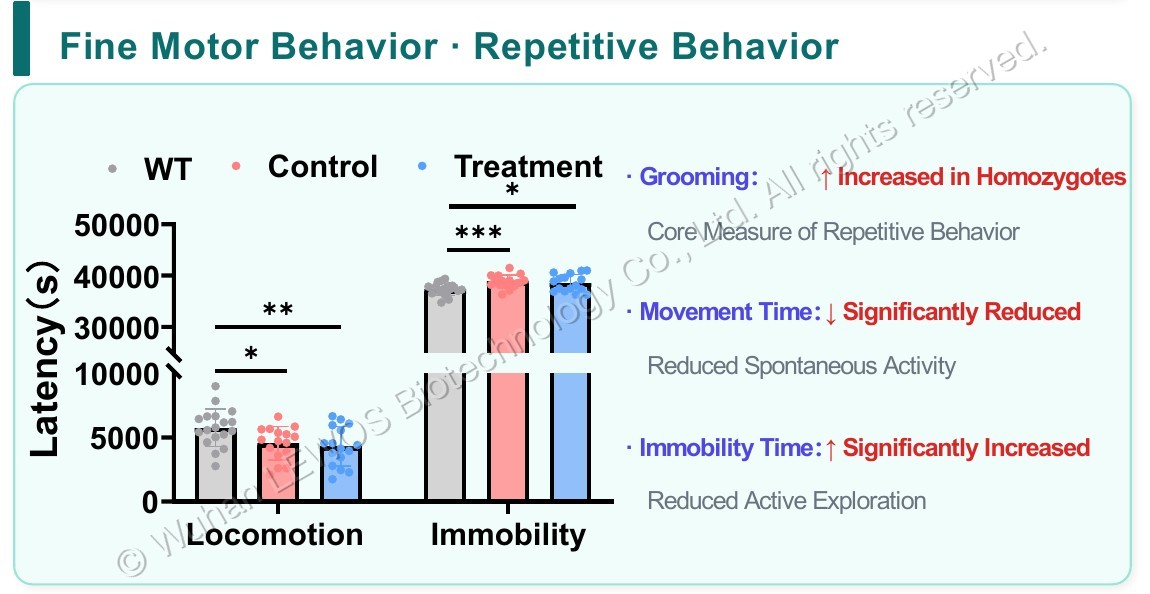
Fine behavior · Stereotyped repetitive behavior
Fine behavioral testing in MECP2-TG mice: bar graphs of Latency(s) for the WT, Control and Treatment groups (Locomotion and Immobility), annotated with the stereotyped repetitive behavioral phenotype of increased grooming, reduced locomotion time and increased immobility time.
Technical contact
Discuss your target, model or delivery question and learn about study plans, project scope and pricing.