 LEWOS BIOTECHNOLOGYNEUROSCIENCE · PRECLINICAL CROExplore · Discover · Advance

Models & evidence
Preclinical efficacy depends on whether a model matches the target mechanism, disease stage and endpoint. The same candidate can behave differently across model backgrounds. LEWOS organizes validated animal models and endpoints across seven directions, with representative data to support program and study-design decisions.
- 7Research areas
- 14Model topics
- 200+Project experience
Neurodegeneration
Connect protein pathology and neuronal change with cognitive, motor and efficacy endpoints.
AD · Alzheimer’s disease
Alzheimer's disease
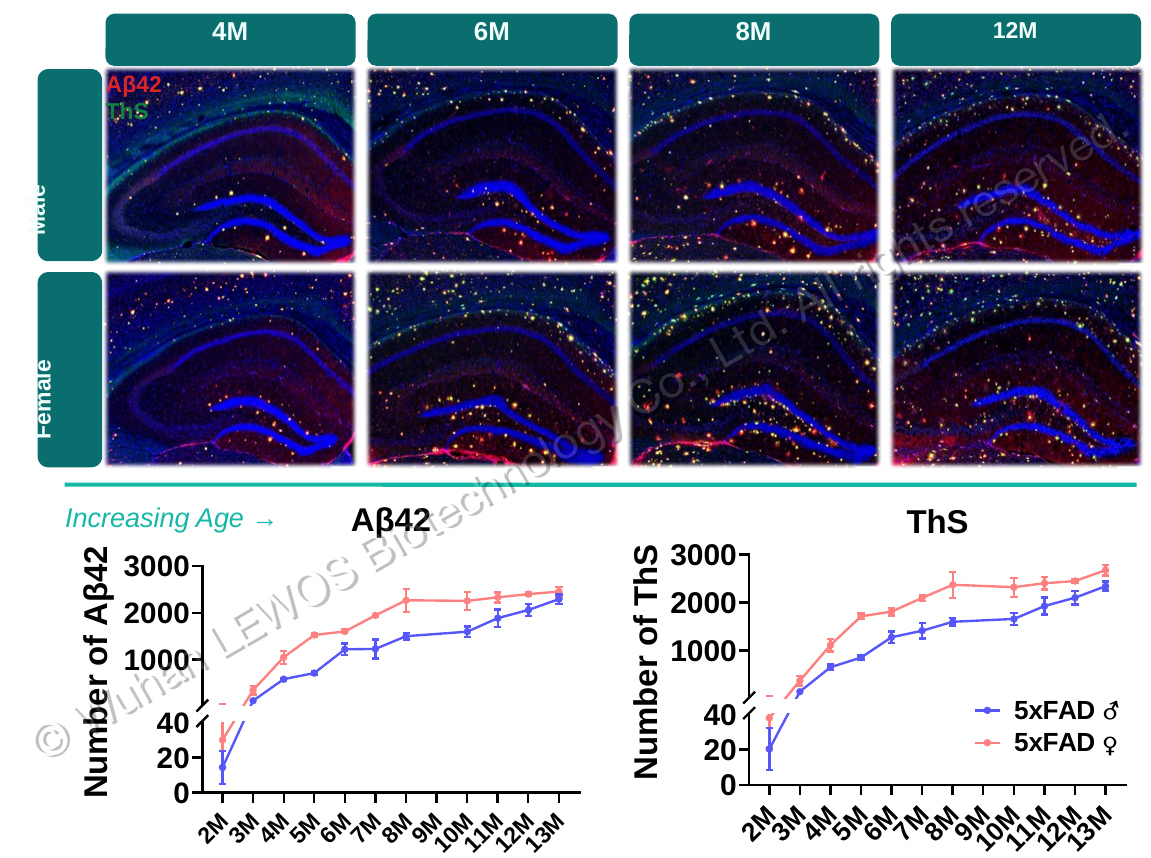
Aβ / Tau pathology, neuroinflammation and cognition.
- Strain / model
- Core endpoints
- Aβ42 / ThS pathology burden
- Tau phosphorylation and protein expression
- Glial and inflammatory markers
PD · Parkinson’s disease
Parkinson's disease
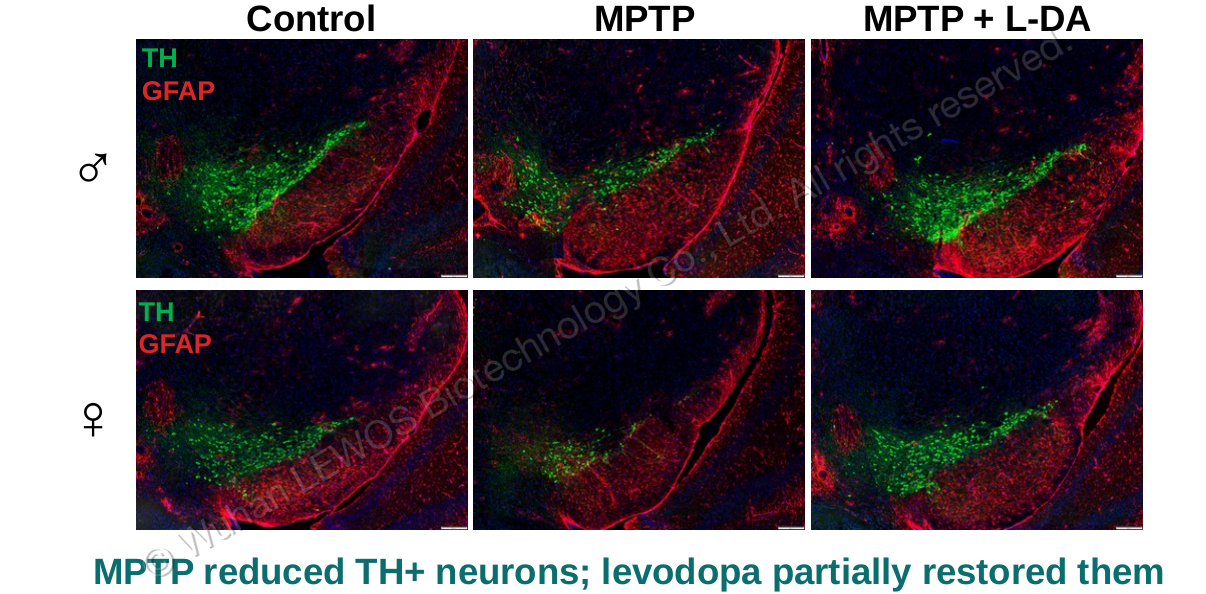
α-syn, TH+ neurons and motor-function assessment.
- Strain / model
- Core endpoints
- TH+ neurons and α-syn quantification
- Beam walk, pole, rotarod and open field
- DA / DOPAC / HVA
ALS · Amyotrophic lateral sclerosis
Amyotrophic lateral sclerosis
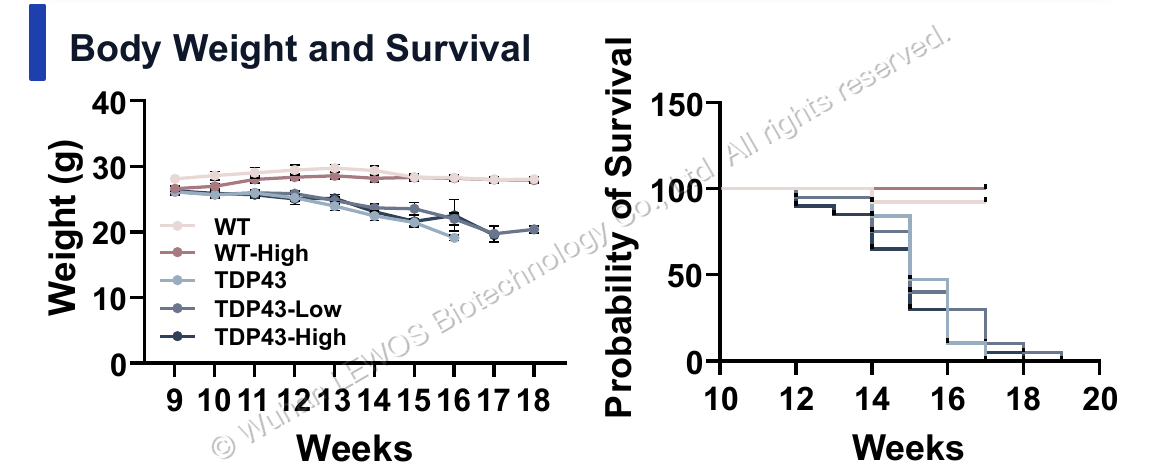
Motor function, body weight, survival and neuromuscular pathology.
- Strain / model
- Core endpoints
- Rotarod, grip strength, pole and wire hang
- Body weight and survival curve
- Spinal neurons and neuromuscular junction
Neurodevelopment
Match social behavior, cognitive flexibility and synaptic function to the target and model background.
ASD · Autism spectrum disorder
Autism spectrum disorder
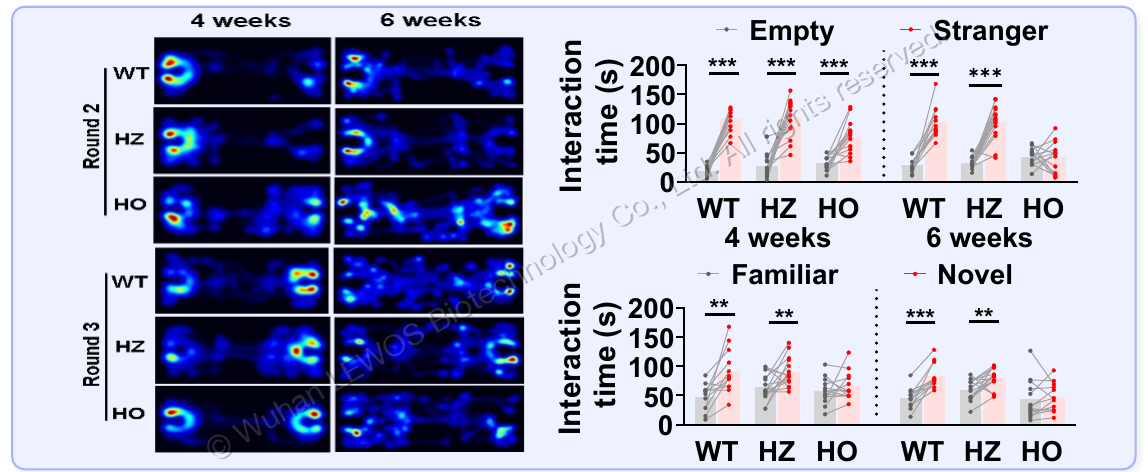
Social preference, social novelty and repetitive behavior.
- Strain / model
- Core endpoints
- Three-chamber social and social novelty
- Repetitive and fine-motor behavior
- Novel-object recognition and cognitive flexibility
Rett syndrome
Rett syndrome
- 01MECP2-related model
- 02Behavioral phenotype
- 03Molecular & tissue validation
Behavioral and molecular assessment of MECP2-related phenotypes.
- Strain / model
- Core endpoints
- Behavior and motor function
- Body weight and general condition
- MECP2-related molecular assays
Psychiatric disease
Use stress paradigms and behavioral endpoints to answer emotion-related research questions.
Depression
Depression-related research
- 01Stress paradigm
- 02Behavioral assessment
- 03Mechanistic validation
Match stress paradigm, intervention window and behavioral endpoints to the study goal.
- Strain / model
- Core endpoints
- Sucrose preference
- Forced swim and tail suspension
- Open field and general activity
Anxiety
Anxiety-related research
- 01Disease & stress background
- 02Anxiety-related behavior
- 03Multidimensional endpoints
Build a multidimensional assessment around disease background and anxiety-related behavior.
- Strain / model
- Core endpoints
- Elevated plus maze
- Light-dark box
- Open-field exploration and activity
Neural injury
Cover stroke and traumatic brain injury with injury context, intervention timing and functional recovery.
Ischemic stroke
Ischemic stroke
- 01Ischemic injury
- 02Neurological function
- 03Tissue & molecular endpoints
Match ischemic injury, neurological function and tissue change to the study design.
- Strain / model
- Core endpoints
- Model and general-condition monitoring
- Neurological function and behavior
- Tissue injury and histology
TBI · Traumatic brain injury
Traumatic brain injury
- 01Injury & intervention window
- 02Functional recovery
- 03Tissue & molecular endpoints
Organize functional assessment around injury severity, observation window and intervention strategy.
- Strain / model
- Core endpoints
- Post-injury functional monitoring
- Motor and cognitive behavior
- Tissue injury and glial response
Pain
Separate neuropathic and inflammatory pain, combining sensory behavior with tissue evidence.
Neuropathic pain
Neuropathic pain
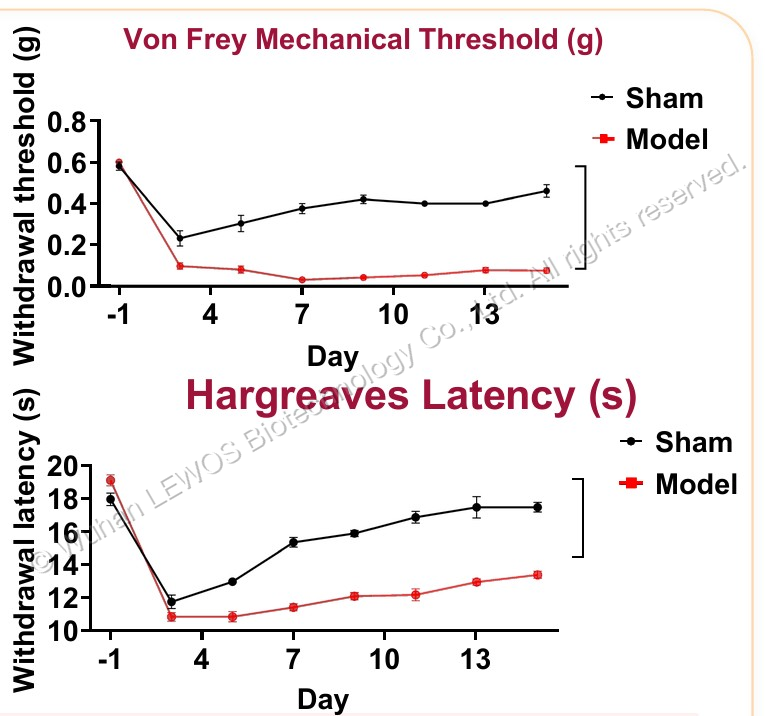
Mechanical, thermal and cold pain with DRG / spinal-cord endpoints.
- Strain / model
- Core endpoints
- Von Frey mechanical threshold
- Thermal and cold pain
- DRG electrophysiology and histology
Inflammatory pain
Inflammatory pain
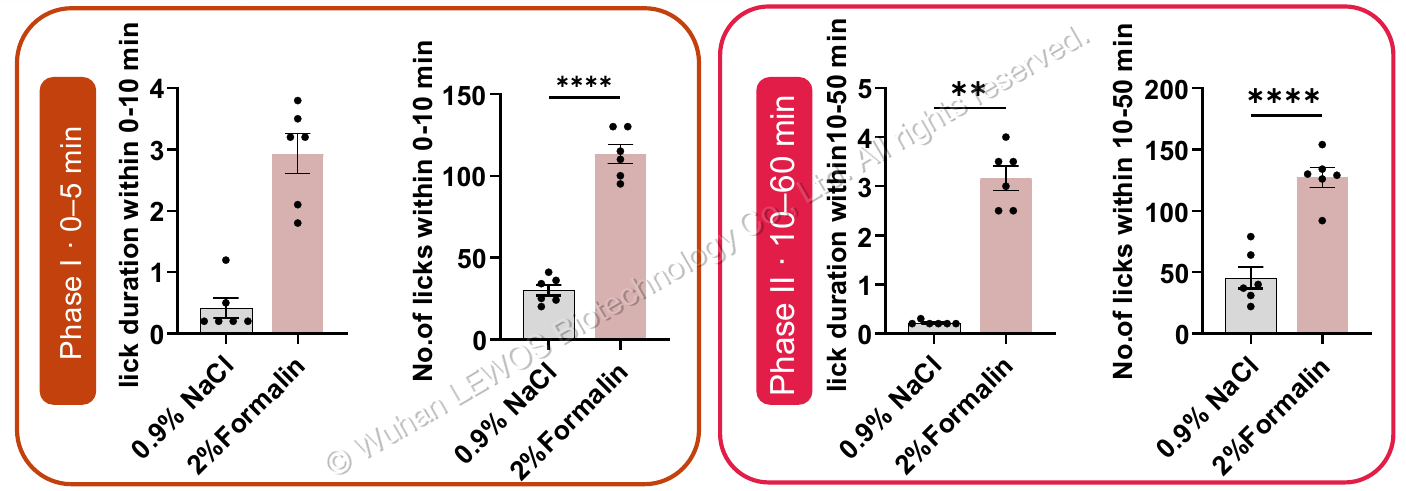
Separate acute and sustained inflammatory phases to compare pain behavior.
- Strain / model
- Core endpoints
- Paw-licking time and counts
- Pain behavior across phases
- Mechanical and thermal pain
Other CNS disease
Match the model, dosing approach and endpoints to the disease question.
Delivery evaluation
Evaluate macromolecule and nucleic-acid delivery from route and tissue distribution to target engagement.
hTFR · BBB delivery
hTFR macromolecule brain delivery
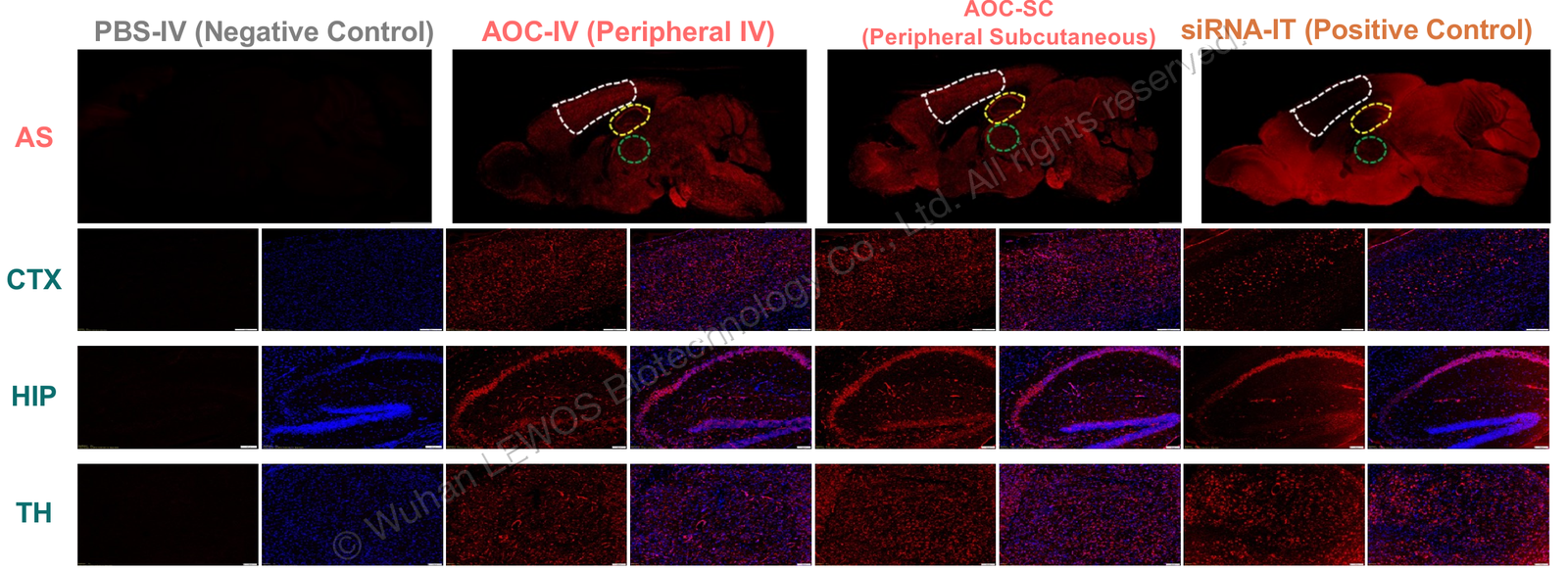
Connect TfR1-targeted antibody and protein delivery with brain-region distribution and target engagement.
- Strain / model
- Core endpoints
- Distribution across cortex, hippocampus and thalamus
- Peripheral-tissue comparison
- qPCR target-gene quantification
Nucleic acid delivery
Nucleic acid delivery
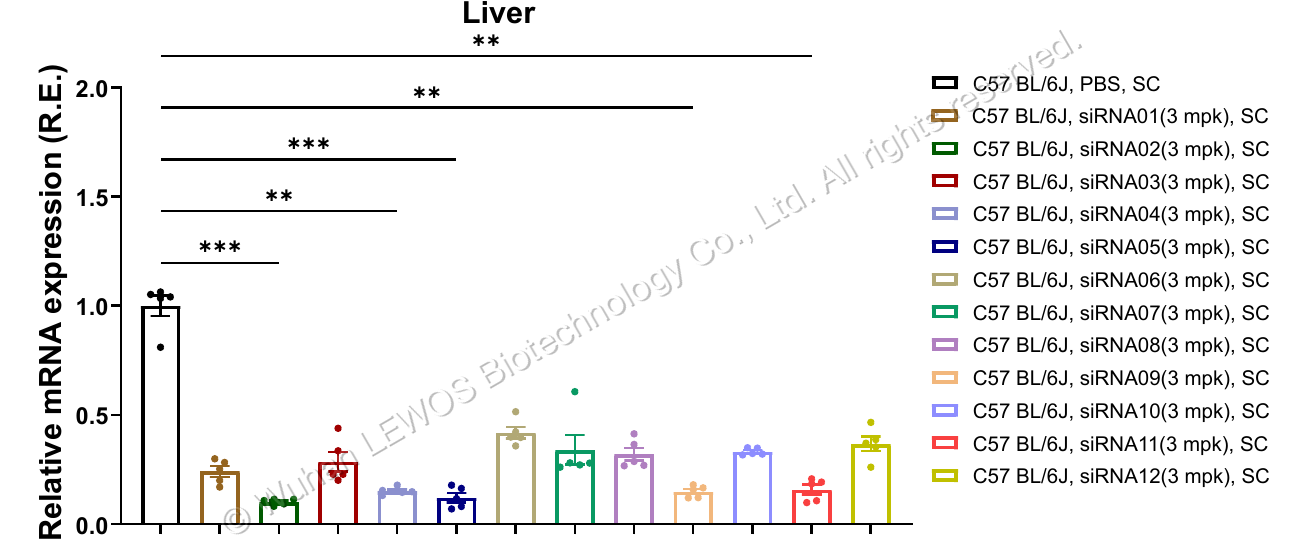
Compare candidate sequences, routes, tissue distribution and expression or knockdown.
- Strain / model
- Core endpoints
- Cross-candidate comparison
- Liver, muscle and peripheral tissue
- Brain regions, spinal cord and DRG
Technical contact
Tell us your disease area, candidate type and scientific question. If there is no exact match, we can adjust modeling and endpoints around the mechanism and study goal.